The Language of Hope
Greetings from Wasta, South Dakota!
I'm helping Sam with his move back to Oregon from Minnesota and the packing/sweeping/lugging came with a bonus mother-son road trip from St. Paul to Portland.

It's 6:30 AM. I'm currently sitting in a green patio chair outside our pokey motel room reading while Sam sleeps off the stress of his big move. The motel's gravel parking lot is occupied by a few scraggly weeds and a single car: Sam's Subaru, a lifesaving hand-me-down from his grandmother, now packed full with everything he owns.
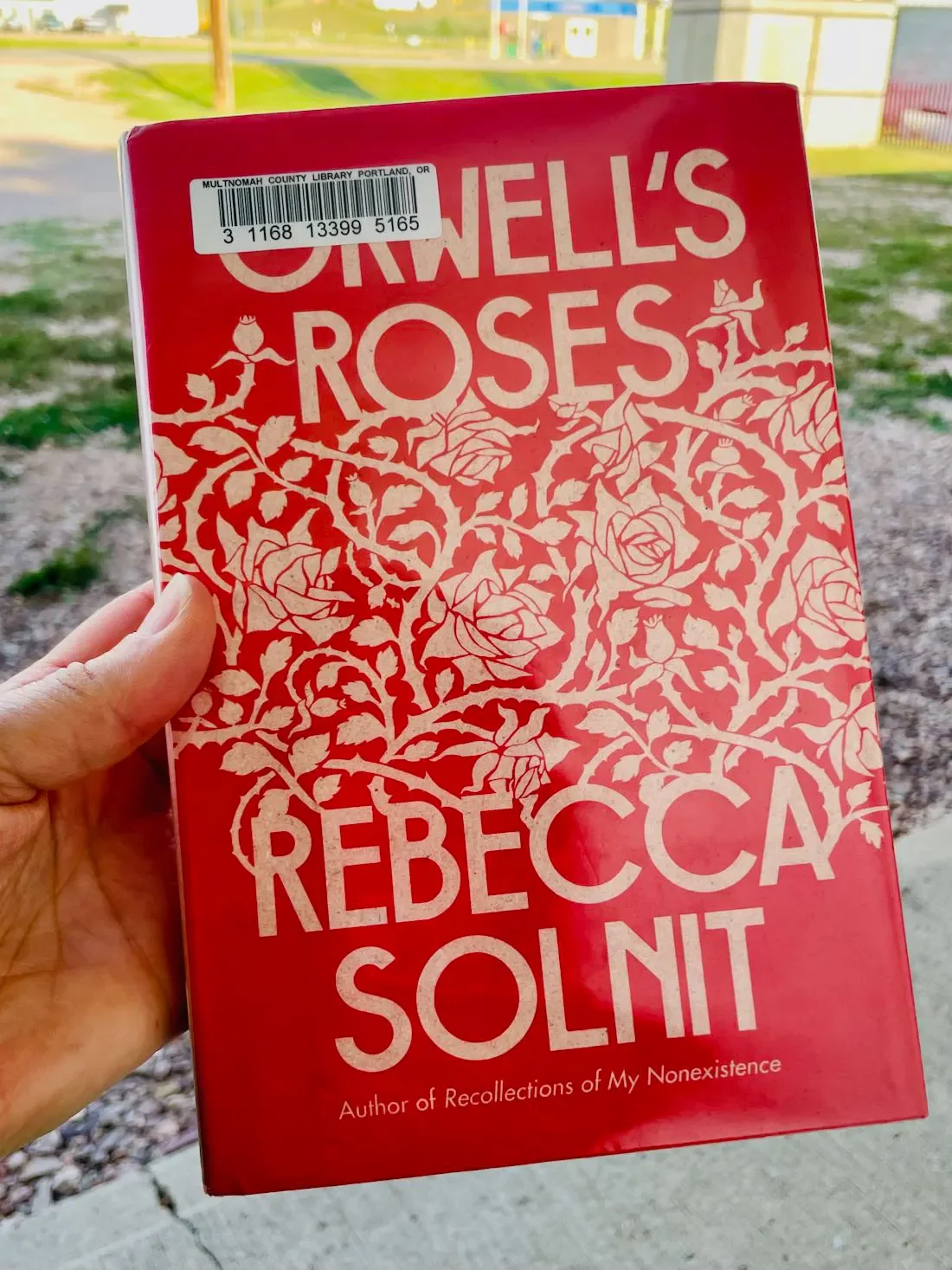
My road trip book is Orwell's Roses by Rebecca Solnit. Rebecca Solnit is one of my heroes. Her book, Hope In the Dark, forever altered and expanded my approach to activism. I also love roses and am fascinated by George Orwell (who isn't these days?) so Orwell's Roses was bound to move to the top of my library list.
I read Orwell's landmark dystopian novel 1984 in…1984 (I was in high school). But he made an even bigger impression on me in college when I read his essay “Politics and the English Language,” written in 1946. The essay sparked my curiosity about rhetoric and the sometimes-dark art of persuasive language.
In the essay, Orwell criticizes lazy metaphors and evasive political writing as tools that justify atrocities and stifle creative thought. Language gives shape to ideas that could threaten political power. Totalitarian regimes seek to strip language of its utility by complicating it or diluting it so much it becomes useless, like a dull knife.
Orwell comes across as cranky and pedantic (and he probably was), but his moral clarity and righteous rage burned itself into my teenage heart. Like Solnit's Hope In the Dark, it permanently changed how I thought about the interaction of language and power.
Back to Orwell's Roses. In 1936, a decade before he began writing 1984, Orwell planted a modest rose garden outside his cottage in Wallingford, England. The man who would go on to write one of the most famous anti-fascist novels was a lover of humble, growing things. Orwell's rose garden — a speck of beauty and hope he cultivated between brutal world wars — captured Solnit's imagination and sent her on a research odyssey through history and around the world. The result is a wandering collection of essays about Orwell himself but also the nature of language, beauty, power, propaganda, injustice, and joy.
Orwell's Roses re-ignited the flame my early Orwell reading started. I shouldn't be surprised that Orwell is one of Solnit's heroes as she is one of mine.
We're living in particularly Orwellian times right now.
We're in a war of words.
I worry about how this impacts every observant young adult contemplating a future framed by poisoned rhetoric. For many, talk of beauty and hope rings hollow and cynicism (or, doomerism as Sam calls it) seems the only rational choice.
But that's the trap, isn't it? Despair is a dictator's weapon because it's seductive and infectious.
When we abandon the language of beauty and joy we treat hope as if it's already gone and starve our own energy source. I'm not immune to despair, but I refuse to let its manufactured tentacles pull me under without a fight. I want my kids to hear agency and hope in my language. It doesn't take much. Even something as small as this newsletter can provide a spark.
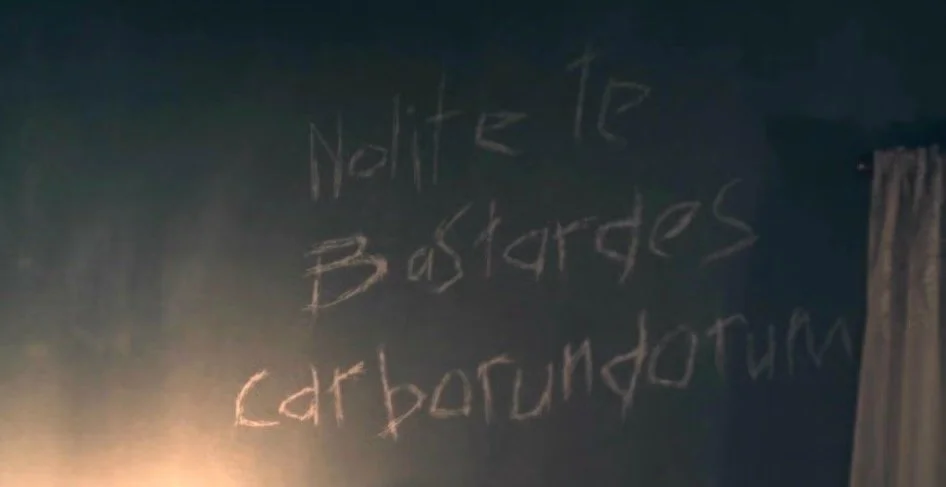
The low rumble of the interstate reminds me it's time to get back on the road. As I get up to stretch, a phrase from another famous dystopian novel pops into my head: nolite le bastardes carborundorum, Margaret Atwood's invented Latin rallying cry from The Handmaid's Tale, which translates roughly to: don't let the bastards grind you down.
The Latin might be invented, but the sentiment is real.