They'll Forget Your Advice But They'll Remember Your Story
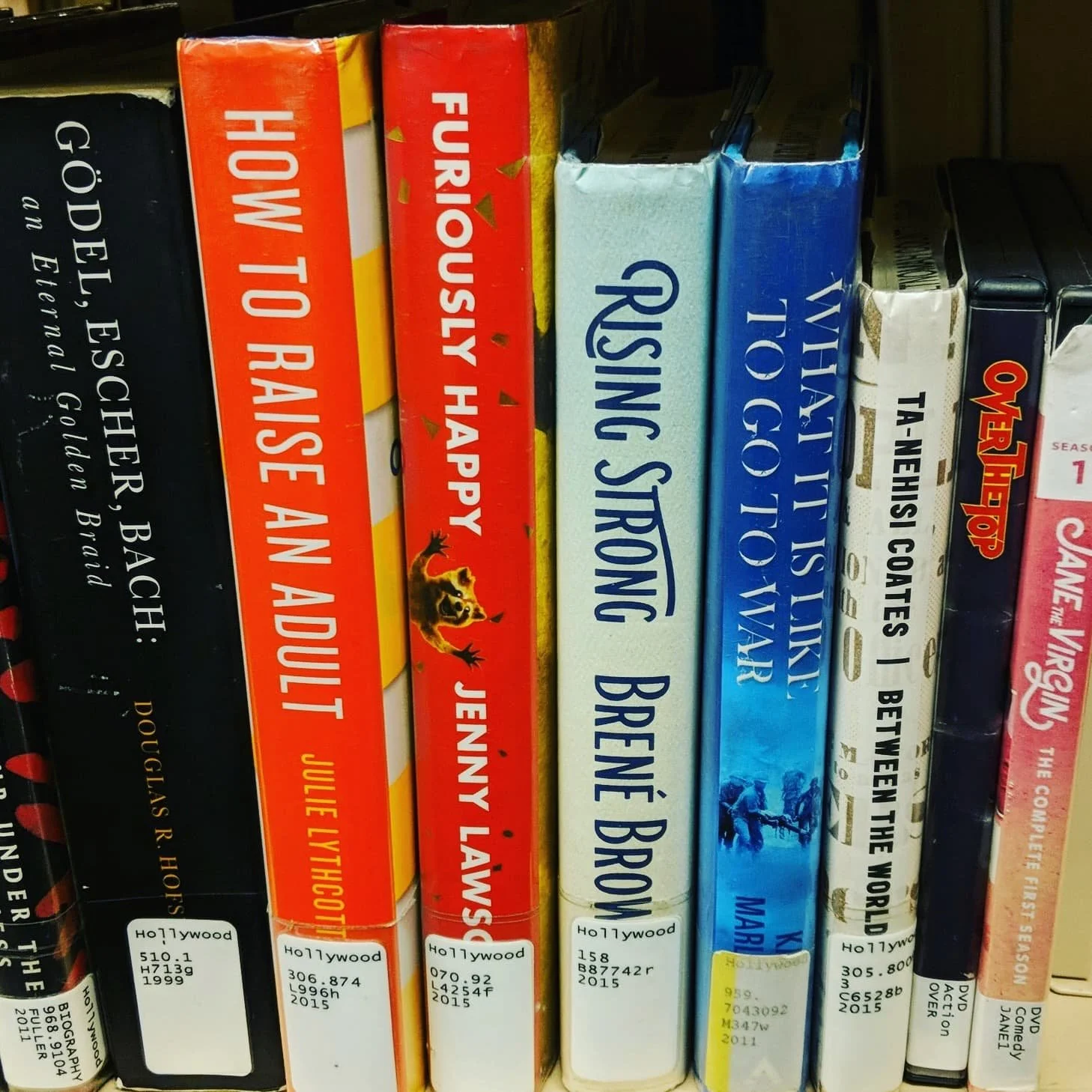
Rising Strong at my beloved local library.
When I think back on the most memorable advice I've received, it usually came wrapped in a story.
There's something magical about hearing a story: one's insides quiet down and open up, anticipating something interesting or entertaining or profound. (I had this feeling when I read Chris Guillebeau's The Money Tree.)
In her book Rising Strong, Brene Brown calls this being wired for story.
In a culture of scarcity and perfectionism, there's a surprisingly simple reason we want to own, integrate, and share our stories of struggle. We do this because we feel the most alive when we're connecting with others and being brave with our stories - it's in our biology.
I've been thinking about why stories are such powerful teaching tools. Here's what I've come up with so far:
A how-to tells you what to do; a story invites you to think about how you might do it.
A how-to defines a path; a story offers a map.
A how-to activates your thinking; a story activates your imagination.
A how to draws a line; a story paints a picture.
A how-to is about information; a story is about people.
Plus, it's usually fun to hear a story. But I think it goes deeper than that: stories reassure us we're not alone.
When we see ourselves reflected in another person's story, we feel seen. We find that our weird fears, hangups, and quirks aren't so weird after all. We remember we're part of the human collective.
Stories remind us we belong.
In this strange moment of grief- and pandemic-induced solitude, I want to hear stories. I want to get better at telling my own. I'm searching for words -- messy, inadequate words -- for the unknowable.
I don't need more information. I need imagination.