My Kid’s Passion for Art Has Me Questioning the Gospel of “Balance”
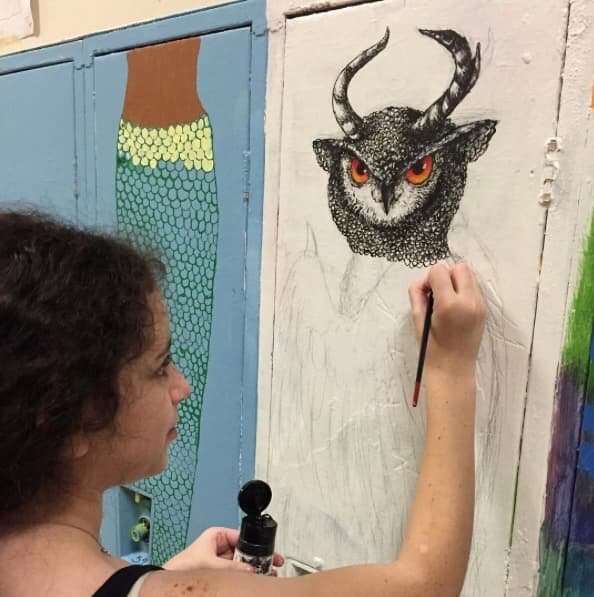
This is my 12 year-old daughter, Mirabai, painting her locker. I posted this picture on Instagram and the explosion of amazed wows got me thinking.
In the last three years, I’ve watched Mirabai’s passion for art blossom. It started with sketching and doodling in a notebook, then expanded to the computer. She now draws/paints most of her art using illustration software and a tablet with a pen-shaped stylus.
She taught herself by watching speedpaints on YouTube. After that, it was practice. Hours and hours of practice.
Mirabai doesn’t just like making art. She must make art.
Helping kids “find their passion” seems like the brass ring for us parents.
Passion is often pegged as the precursor to a meaningful career and it doesn’t hurt the college application, either.
The importance of finding this passion — whatever it is — drives well-meaning parents to sign their kids up for a dizzying array of enrichment activities. Others may approach “exposure” more casually, but are haunted by a vague sense of failure when their free-spirited kid reveals he’s just not that into soccer. Or violin. Or anything, it seems.
I’m in there with everyone else. I want my kids to grow into happy, productive adults, and sometimes wonder if my relaxed approach is too “soft.”
But, in Mirabai’s case, my feelings are irrelevant and I can’t (and wouldn’t) take any credit for her artistry. Her passion and drive burst forth with no special exposure to art classes or encouragement to “be creative,” and have nothing to do with my parenting strategies.
Parenting a kid who has found a passion comes with complications.
We constantly remind Mirabai to do other things, anything, besides art. Homework, physical activity, chores, spending time with friends. It’s not that she doesn’t care about these things, she just forgets. Mira gets so focused while she’s drawing she forgets to eat.
This is where the narrative of finding a passion collides with another piece of parenting gospel: the importance of balance.
Parents want to raise kids who can handle academics, sports, friendships and hobbies with ease. Well-balanced kids don’t spend too much time on any one area of their lives. The assumption is that these kids will grow up to be well-balanced adults.
But passion is the opposite of balance.
A kid who’s passionate about something turns away from other activities. She forgoes socializing and doesn’t want to venture too far on weekends. She narrows her focus. If Malcolm Gladwell is right about the 10,000 hours it takes to achieve mastery, I’m watching Mirabai find those hours anywhere she can, including stealing them from sleep.
The result is undeniable. Her technique is deepening, and her art grows more sophisticated by the month. She has developed a supportive artistic community online (not unlike the community I found ten years ago when I started blogging) and is even mentoring other artists. Her confidence is soaring, and she finds her artistic work meaningful in a way I’ve only experienced as an adult. It’s amazing to watch this passion unfold.
But as a parent, it’s tricky.
It’s hard to know when — or if — to inject a message of moderation.
When Mirabai's drawing, she’s in her zone. Psychologist Mihaly Csikszentmihalyi calls this flow and claims it’s “the secret of happiness.” Should I really disrupt her flow because I want her to eat a sandwich? What about when she’s been at her computer drawing for four hours? Five? Six?
Sometimes Mirabai's passion for art conflicts with what the rest of the family needs. Okay, if I’m honest, with what I need.
I’m always gunning for a hike, drive or wander with my family. These are my favorite people, and I want to share adventures and make memories together. But after a busy week at school, Mira craves quiet, solo, unstructured time at home. We compromise — she sometimes joins me on my walks, and I make very few plans on the weekends — but it’s not easy, and neither of us gets as much time as we want.
Because Mira's art is so impressive, people tend to shower her with praise and attention. Then the questions follow.
“Do you want to be an artist when you grow up?” “Are you going to go to art school?”
It’s all generous and well-meaning, but I worry she’s getting the (unintentional) message that art is her only path toward a fulfilling career. I often remind her that her art never needs to earn a dime; some of the very best artists maintain their day jobs. Art might become a lifelong hobby, and her career might be something else — anything else.
She will always be an artist. But I want her to know that she’s more than her art.
How do you parent a child who has a passion? How do you telegraph support while setting limits?
I’d like to hear from other parents who are in this situation, because we’re just groping our way along (which, I guess, is what we’ve always done). That doesn’t mean I’m throwing up my hands. Passion or no, Mirabai lives in a world which includes school, friends, family, chores, and regular mealtimes. Assuming her artistic passion is lifelong (no guarantees, but it’s looking that way), she’ll have to balance art with her other responsibilities for the rest of her life.
All I can do is trust her. Give her permission to explore. Make room in our lives for her passion. I have to accept that I don’t fully understand what’s happening or where this is going, and give her the opportunity to show me, and to find out herself.
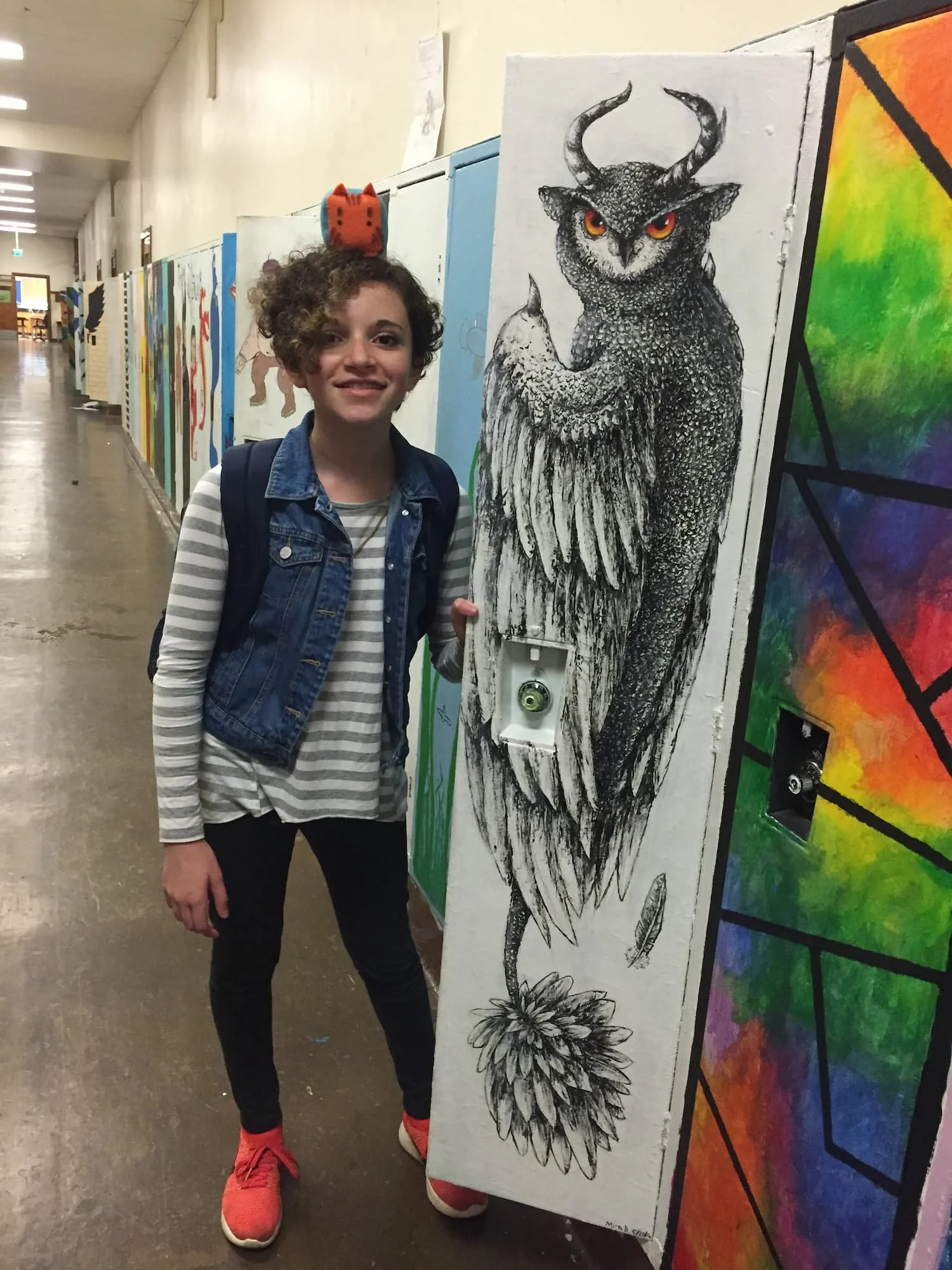
Her finished locker on the last day of middle school.
This post led to the Edit Your Life podcast episode Parenting Passionate Kids.