Sabbatical
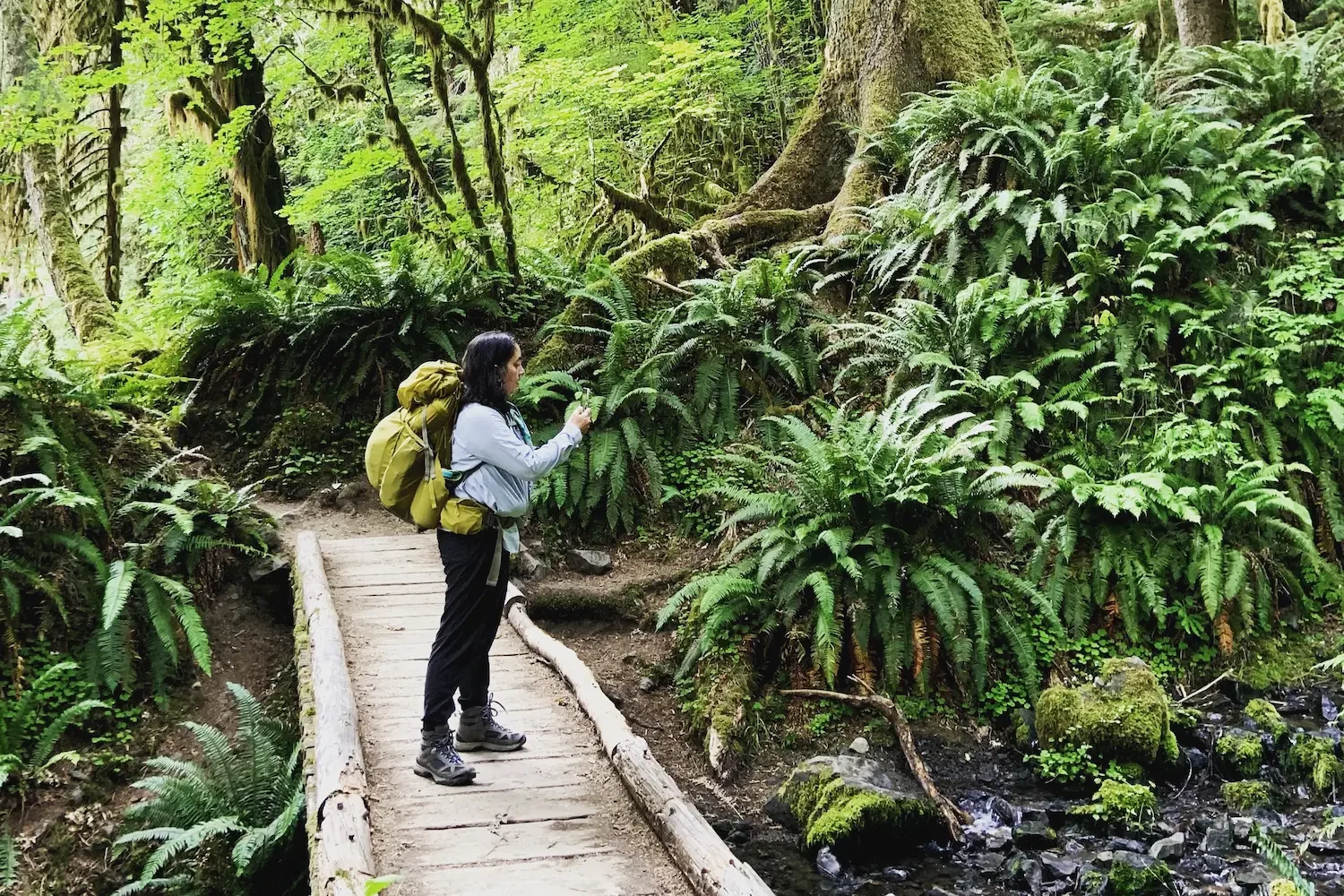
In the primordial forest
How do you pick up the threads of an old life? How do you go on, when you begin to understand…there is no going back?
— Frodo Baggins in Return of the King by JRR Tolkien
A sabbatical is a period in which one temporarily steps away from one's job to rest, travel, and do research. The term shares the same root as the word sabbath, and the same goal of renewal.
Traditionally, sabbaticals were features of academic careers: university professors would be granted a paid year off for every seven years spent teaching. But the notion of a sabbatical is available to anyone. It doesn’t have to last a year or involve exotic travel or quitting a job. But it must constitute a rest.
Hopefully, all one needs is a pause by the side of the road. After a few deep inhalations of the world, one can merge back in, replenished.
But every so often, it isn’t enough just to pull over. Sometimes one must find (or build) a new road.
Author Katherine May calls the act of honoring this process wintering. She fills out her exquisite metaphor in Wintering, one of my favorite books of 2020.
In Chapter 1, ‘September,’ she encourages readers to release their white-knuckle grip on a season of comfort they wish weren’t over.
Once we stop wishing it were summer, winter can be a glorious season in which the world takes on a sparse beauty and even the pavements sparkle. It’s a time for reflection and recuperation, for slow replenishment, for putting your house in order.
In September 2021, I finally stopped wishing it were summer.
A week after dropping my youngest off at college in Minnesota, I was sitting at my Mom’s dining room table in my childhood home in Northern California. I had been getting along well enough: my family was vaccinated so we had a measure of freedom we hadn't experienced in eighteen months. Everyone was healthy, my daughter's college departure had gone smoothly, I had grown used to the weight of grief, my equilibrium seemed intact.
All at once I was struck by the awareness that I was standing on the precipice of an entirely unfamiliar life.
...a life utterly reshaped by the death of my father followed closely by my husband's mother, the slow-moving catastrophe of the pandemic and the wreckage in its wake, a newly-empty nest, the political landscape after the January 6 Capitol insurrection, and an online environment I no longer recognized nor trusted.
My personal and social assumptions, my career aspirations, the skills and coping mechanisms on which I'd always relied...everything was suddenly in question.
It was like being jolted awake in the middle of the night in a different country. Again, Katherine May:
This is a crossroads we all know, a moment when you need to shed a skin. If you do, you’ll expose all those painful nerve endings and feel so raw that you’ll need to take care of yourself for a while. If you don’t, then that skin will harden around you.
The moment of transformation was upon me whether I wanted it or not.
I'd only experienced a rerouting like this one other time, many years ago.
The details are private, but the result was similar: the shock of impact followed by a shrapnel spray of dislocation and shame. Then, as now, I found myself hurtling toward a life I didn't recognize. The scale of change was so vast I couldn't meet it by adjusting my workload or tweaking my social media habits or taking a couple weeks off.
I didn't know what to do. All I knew was what I did last time; what I had to do now.
I had to stop.
This was an unwelcome realization, because, among other things, it meant I had to end my time as co-host of the Edit Your Life podcast.
This multi-year conversation with Christine, itself a continuation of a multi-year conversation that started when we co-wrote Minimalist Parenting in 2013, has been an ongoing thread of friendship, joy, and insight. I didn't want it to end. Christine is dear to me, and we've seen each other through remarkable changes in our lives. We've raised our kids together, built stuff together, traveled together. But after 250 podcast episodes, it was time to navigate yet another transition.
Christine, being the strong, supportive friend she is, respected my decision, even if neither of us completely understood it. For months we discussed how we wanted the transition to work and feel before announcing it to our listeners.
Recording the final episode was lovely, fun, sad, momentous...I can't find the words to properly describe how it felt. Perhaps because I'm still feeling it. Christine went above and beyond just a simple conversation; she collected thoughts and comments from listeners and shared them in the episode. (Thank you to all who shared. I printed your comments and tucked them into my journal. I'll save and re-read them forever.) I'm sitting with how much I'll miss our weekly pre-dawn recording sessions and our interactions with listeners.
Taking time to situate myself in this new life feels like a radical act.
It's liberating, and also confusing. When people ask what's next? I don't have a ready answer. I can feel the words forming (something something writing, something, storytelling, art as activism, something) but I can't combine them into complete sentences.
Is this self-indulgence dressed up as enlightenment? The quieter part of me — the part honed by grief — knows this is what I must do. A healing pause; a natural resetting of breath.
I need to connect with loved ones in person or over the phone rather than on social media. Renegotiate the boundary between public and private. Shift emphasis from mind to body; from screen to sidewalk or trail or highway. Recall what I used to love, and discover what nourishes now. Take time to inhabit the present. Settle into newly-defined relationships with my family members. Become a better writer.
Learn how to live and, someday, hopefully thrive in the world as it is now.